A good GPS tracking solution combines precise hardware with smart cloud technology. It’s designed to give you constant visibility and accurate data. This system depends on five key components that work together seamlessly.
1. The GPS Module: The Heart of Precision
The GPS Module is the primary navigator of the device. It stays in constant dialogue with global satellite constellations to calculate an asset’s precise latitude, longitude, and velocity. For professional-grade tracking, we utilise high-sensitivity modules that offer a fast Time to First Fix (TTFF), ensuring that even in urban canyons or under dense foliage, your location data remains pinpoint accurate.
2. SIM Card & Connectivity: The Digital Bridge
Location data is only valuable if it reaches your screen in real-time. This is the role of the Connectivity Layer. By using specialised M2M (Machine-to-Machine) SIM cards, the device acts as a secure messenger, whisking captured data across cellular networks (2G,4G, 5G, LTE, or NB-IoT) to the cloud. This seamless link ensures that whether a vehicle is across the street or across a border, you are never out of touch.
3. Battery & Power Source: The Pulse of Reliability
Uptime is the most critical metric for any security device. Most vehicle-mounted trackers are hardwired directly into the asset's 12V or 24V power system for continuous, maintenance-free monitoring. For non-powered assets like containers, high-capacity internal batteries take over. These systems often include intelligent sleep modes that conserve energy when the asset is stationary, ensuring the device is ready to report the moment movement is detected.
4. Advanced Sensors: Beyond Simple Location
To truly understand a fleet’s health, the system must feel the pulse of the vehicle through Integrated Sensors. These components turn physical movements into digital insights:
- Fuel Sensors: Detect sudden drops (theft) or inefficient consumption patterns.
- Ignition Sensing: Monitor exactly when an engine is idling versus active.
- Accelerometers: Track driver behaviour, such as harsh braking, rapid acceleration, or sharp cornering, to improve road safety.
5. The Software Dashboard: Your Command Centre
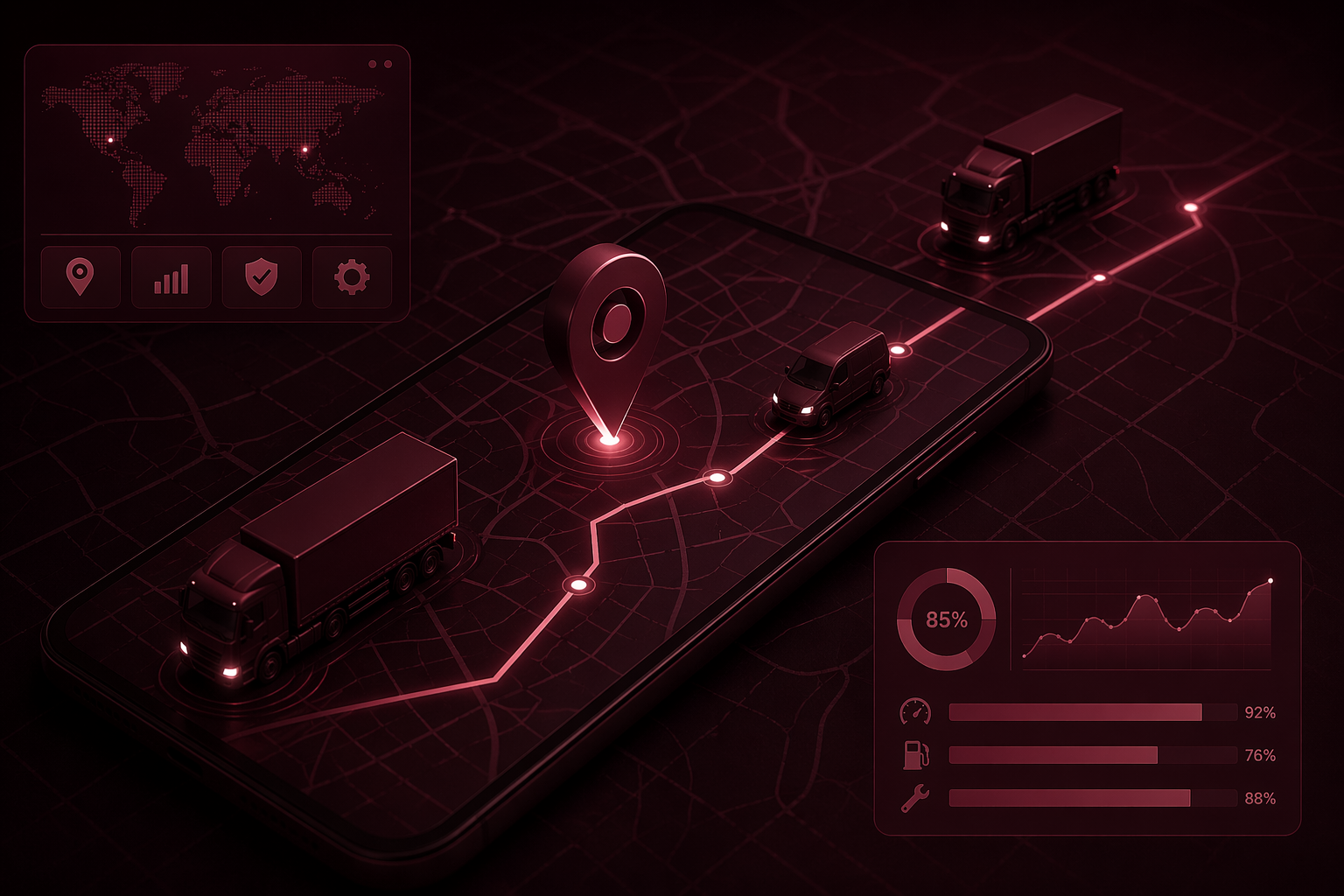
The final piece of the architecture is the Software Dashboard. This is the human interface where complex technical pings are transformed into a user-friendly visual map. From this centralised command centre, managers can set virtual geofence boundaries, review historical route playbacks, and generate automated reports. It is the intelligence layer that allows businesses to stop guessing and start making data-driven decisions.