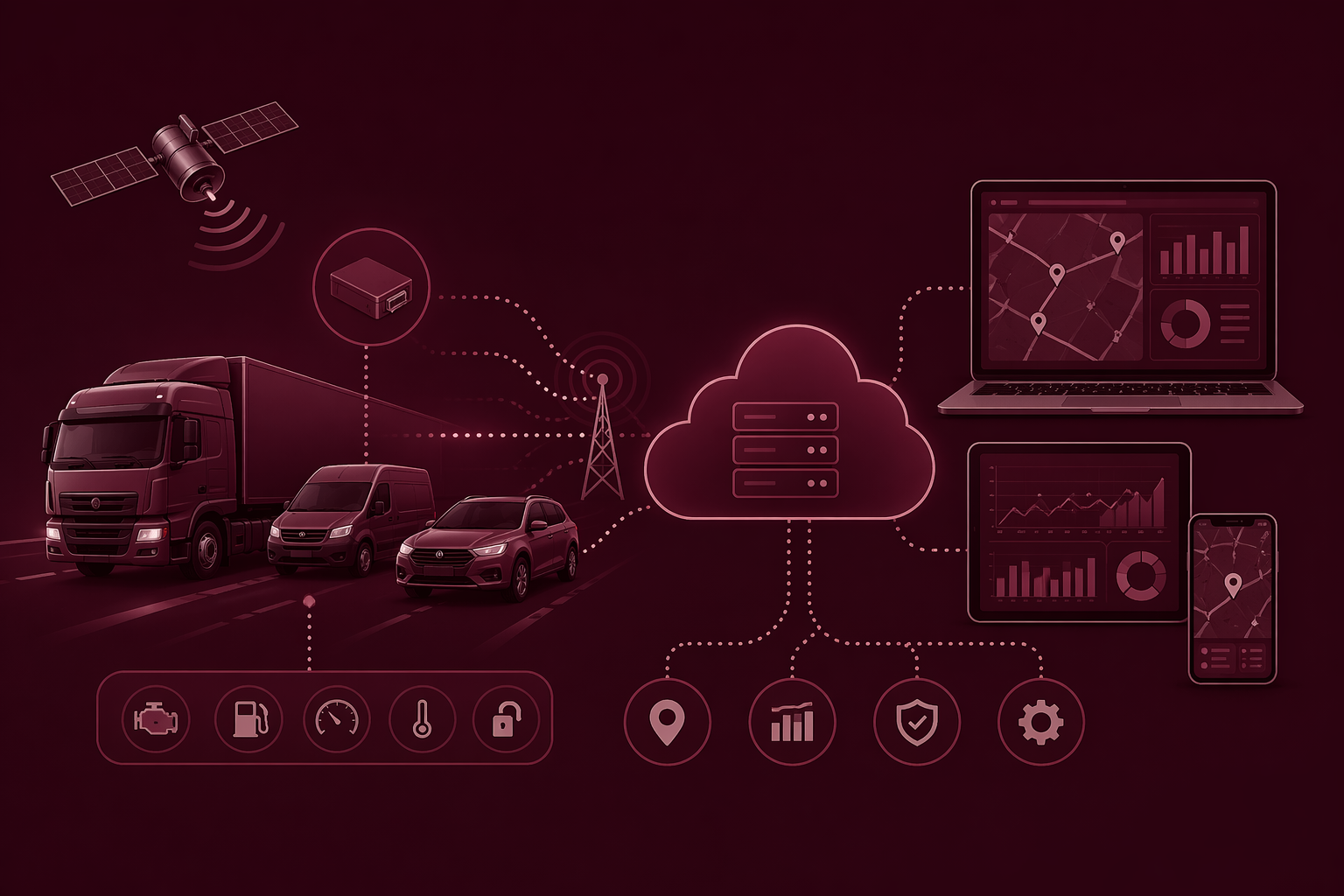
Telematics is not a single solution but rather a broad system which can be adopted to different use cases based on industry. Depending on the goal of the user, it can be designed differently. Be it tracking a personal car, managing an entire fleet or monitoring high value assets, telematic solutions are available. Let’s dive deeper into the main types of telematics currently used across industries.
Vehicle Telematics
One of the main commercial usages of telematics comes with Vehicle Telematics. Vehicle telematic devices are commonly used in personal vehicles or by car rentals and leasing companies. Whether it be personal cars or single commercial units, it provides detailed visibility into the vehicle’s performance. Users can get a better understanding of fuel consumption, trip history, driver behavior, and engine diagnostics. Through this, users become more aware of their vehicle.
Video Telematics
Video telematics provide extra support through video footage. Using AI powered cameras, video telematic devices capture the driver’s behavior and the surrounding areas, thereby gathering visual evidence.
This helps businesses to not just track the incidents but also understand what may have been the cause behind it. These visuals can be extremely helpful for accident analysis, driver safety monitoring, and risk reduction.
Fleet Telematics
Fleet telematics is designed for businesses that manage multiple vehicles on a large scale. They are used to monitor commercial vehicle operations, locations, and status. It goes beyond simple tracking and focuses on optimizing operations, reducing costs, and improving productivity. Fleet managers utilize telematics through the following:
- Centralized tracking of all vehicles in a single dashboard
- Route planning and optimization
- Fuel usage monitoring across the fleet
- Driver performance management and safety monitoring
- Maintenance scheduling and compliance tracking
Fleet telematics devices are commonly used in logistics and transportation companies, delivery services, public transport, corporate fleets, school buses, and more.
Insurance Telematics (UBI)
Telematics are also used across industries that go beyond the typical fleet management. Insurance companies use telematics data to monitor driver behavior, creating personalized insurance models instead of relying on general estimates. Some of the features monitored by Insurance companies include:
- Monitoring driving habits like speed, braking, or acceleration.
- Tracking mileage and trip frequency.
- Risk assessment based on real behavior.
Through the usage of telematic devices, owners can encourage responsible driving as well as earn low premiums in their insurance coverage.
Asset Tracking Telematics
This type of telematics focuses on monitoring high value assets, especially those that are mobile. Through this the managers can ensure that their assets are well monitored. Some of the key capabilities of asset tracking telematics include:
- Location tracking of equipment, containers, or cargo
- Monitoring conditions like humidity, temperature or shock
- Setting up geofencing for prevention of theft
- Utilization tracking to improve asset efficiency
Fleets can attach GPS trackers to trailers and other non-motorised assets to ensure they don't go missing and route drivers directly to stationary trailers. Drivers can tag locations in their GPS unit when unhitching a trailer, and those coordinates can be quickly passed on, allowing them to route directly to the trailer. The system can also be set up so that an instant alert is sent to a manager's mobile device should a trailer or asset be moved without authorisation.
Asset tracking telematics are commonly used in logistics and supply chain management, along with cold chain industries and in Logistics and supply chain management.
IoT-based Telematics
IoT-based telematics can be portrayed as the next generation of telematics, where vehicles and assets are part of a larger connected ecosystem. This game changer will enhance real-time data capture, intelligent automation, and proactive decision making across fleet operations. With Advanced driver assistance systems (ADAS) and driver monitoring systems (DMS) enhancing road safety, along with AI powered telematics, these innovations will reshape the telematics into a more efficient, safe system.
All these types of telematics serve a different purpose and is focused on different industries, but they all work towards the goal of using real time data to improve visibility, efficiency and decision making. From personal vehicle tracking to larger connected ecosystems, telematics is expanding beyond range, making transportation and asset management smarter, safer and more efficient.