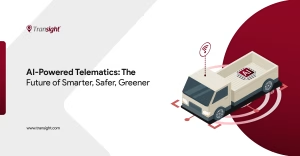
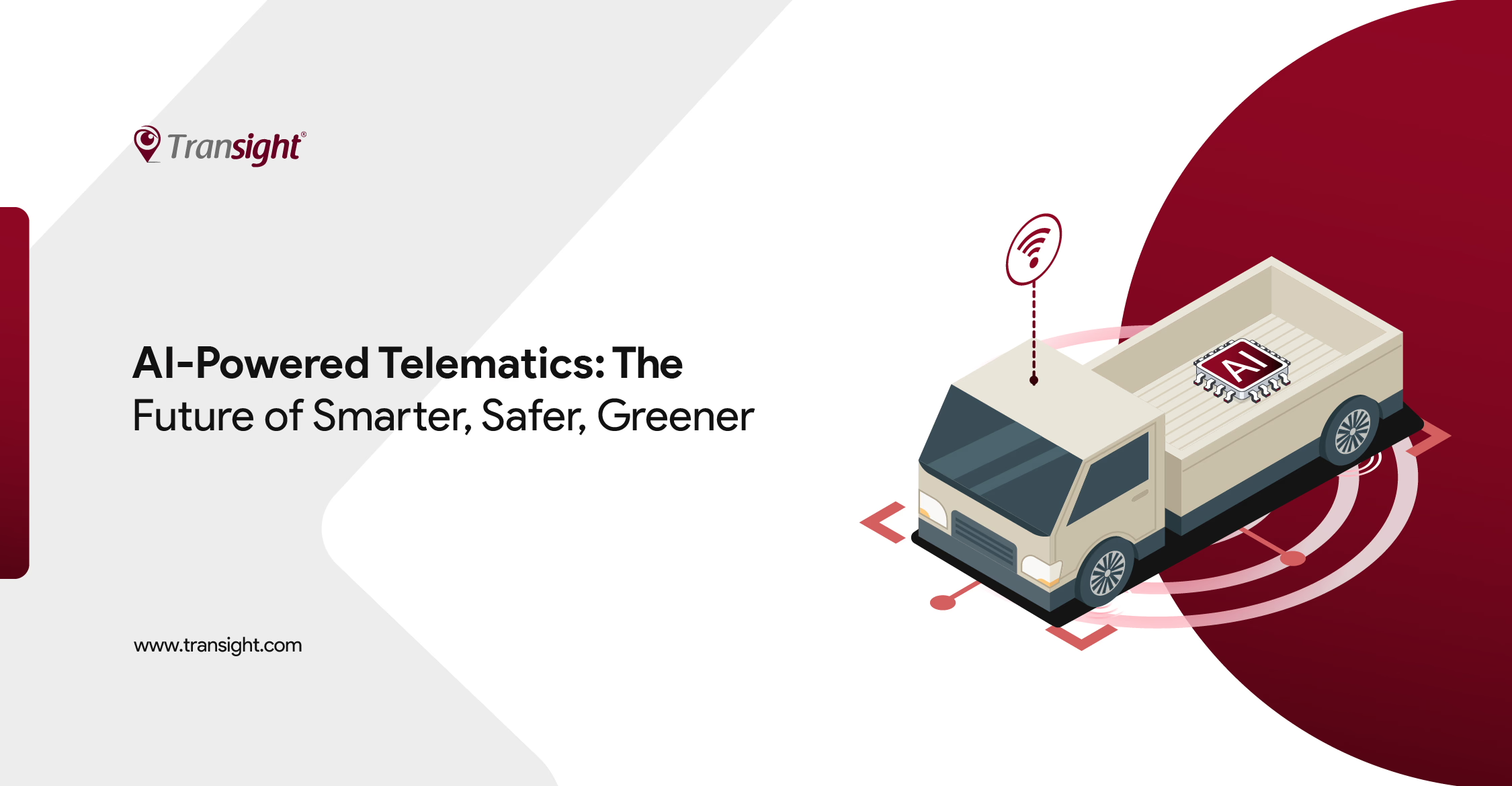
The future of fleet management lies in AI-powered telematics GPS—a next-generation solution that goes beyond location tracking to provide predictive analytics, actionable insights, and intelligent automation. By combining artificial intelligence, real-time data, and connected devices, this technology is transforming how fleets are monitored, managed, and optimized.
In this blog, we’ll explore what AI-powered telematics means, how it works, its benefits, challenges, and where the industry is headed.
Table of Contents
- How AI is Transforming Telematics
- Major Benefits of AI-Powered Telematics GPS
- AI-Powered Telematics GPS Across Industries
- Opportunities and Considerations
- The Road Ahead: What’s Next for Fleet Management
How AI is Transforming Telematics
Telematics GPS is the integration of telecommunications, informatics, and satellite-based navigation systems into vehicles. At its most basic level, it enables fleet managers to track the location of each vehicle, monitor fuel consumption, and record driver activity.
Traditional telematics systems deliver valuable data, but they tend to be reactive. Managers receive alerts about problems after they occur—such as a vehicle breaking down or a driver taking an inefficient route. While this data improves oversight, it doesn’t always translate into smarter decision-making.
This is where AI changes the game.
Artificial intelligence adds a powerful layer of intelligence to telematics by not just collecting data, but analyzing it, learning from it, and making recommendations—or even taking automated action. Here’s how AI is reshaping fleet management:
Predictive Maintenance:
Instead of relying on scheduled service intervals, AI can analyze patterns in engine diagnostics, mileage, and sensor data to predict when a component is likely to fail. This means repairs can be made proactively, reducing costly downtime and extending the lifespan of vehicles.
Smart Routing and Dispatching:
AI algorithms factor in real-time traffic, weather, road closures, and delivery priorities to generate optimal routes. This reduces fuel consumption, avoids delays, and ensures timely deliveries, especially in last-mile logistics where efficiency is critical.
Driver Behavior Monitoring:
Beyond simple speed and braking reports, AI can detect risky driving patterns such as harsh cornering, aggressive acceleration, or excessive idling. It can then provide real-time feedback to drivers or generate training recommendations for long-term safety improvement.
Fleet-Wide Optimization:
AI considers the broader perspective—balancing vehicle assignments, load distribution, and delivery windows across the entire fleet. It can even simulate different operational scenarios to recommend the most cost-effective strategies.
Automated Compliance:
From hours-of-service regulations to emissions standards, compliance can be automated with AI-driven telematics that logs and organizes all necessary data for inspections and reporting.
Major Benefits of AI-Powered Telematics GPS
The integration of AI into fleet telematics provides a range of tangible benefits:
Reduced Operating Costs:
By minimizing fuel waste, preventing breakdowns, and optimizing routes, fleets achieve significant cost savings. Predictive maintenance alone can save thousands of dollars annually by avoiding major repairs.
Enhanced Safety:
Real-time driver feedback and AI-powered monitoring reduce the likelihood of accidents. Some systems can even intervene with automated braking or alerts in case of imminent danger.
Improved Customer Satisfaction:
Accurate ETAs, faster deliveries, and proactive communication improve the customer experience. AI systems can also reroute vehicles dynamically to handle urgent delivery requests.
Regulatory Compliance Made Easy:
Automated logging reduces paperwork and ensures fleets remain compliant with evolving government regulations without extra administrative burden.
AI-Powered Telematics GPS Across Industries
The impact of AI-powered telematics GPS goes far beyond simple vehicle tracking. Its applications cut across multiple industries, each benefiting from improved efficiency, safety, and data-driven decision-making. Let’s look at some of the key sectors leveraging this technology:
1. Logistics and Delivery: For logistics providers and courier services, last-mile delivery is often the most expensive and complex part of operations. AI-powered telematics helps by:
- Dynamically rerouting vehicles to avoid traffic jams, accidents, or road closures.
- Factoring in customer delivery windows to ensure on-time arrivals.
- Reducing fuel consumption through optimized routing.
This results in lower operational costs, higher customer satisfaction, and the ability to meet the growing demand for same-day or next-day delivery.
2. Public Transportation: Public transit systems face constant pressure to maintain punctuality while meeting passenger demand. AI-powered telematics enables:
- Real-time route adjustments based on traffic conditions.
- Smarter scheduling to avoid overcrowding and delays.
- Data-driven insights into peak usage times for better resource allocation.
The outcome is a more reliable, efficient, and passenger-friendly public transportation system
3. Construction and Heavy Equipment: In industries like construction, mining, or agriculture, fleet management goes beyond vehicles to include heavy machinery and equipment. AI telematics delivers value by:
- Monitoring equipment usage and fuel consumption to reduce waste.
- Tracking asset location to prevent theft and unauthorized use.
- Predicting maintenance needs to avoid costly downtime on critical projects.
By ensuring assets are used safely and efficiently, companies can extend equipment lifespan and improve project profitability.
4. Emergency Services: For emergency responders, every second counts. AI-powered telematics transforms how these fleets operate by:
- Guiding ambulances, police cars, and fire trucks through optimal routes with real-time traffic awareness.
- Enabling dispatchers to allocate the closest available unit quickly.
- Providing predictive insights into demand hotspots for better resource planning.
The result is faster response times, better public safety, and potentially life-saving improvements in emergency management.
Opportunities and Considerations
While adopting AI-powered telematics comes with certain considerations, each of these represents an opportunity for businesses to strengthen their operations and future-proof their fleets.
Data Privacy and Security:
Vehicles and drivers generate large volumes of sensitive data. Far from being a drawback, this creates an opportunity to adopt stronger cybersecurity measures. Companies that invest in advanced encryption and secure cloud platforms not only protect their fleet but also build greater trust with customers and partners.
Upfront Investment as a Long-Term Gain:
Equipping fleets with AI systems and IoT sensors may require an initial investment, but the long-term savings in fuel, maintenance, and downtime quickly outweigh the costs. In many cases, companies view this as an investment in operational resilience and competitive advantage.
Workforce Training and Upskilling:
Introducing new tools is an excellent chance to upskill drivers and fleet managers. Training programs help staff become more comfortable with AI insights, creating a culture of innovation. Over time, this also improves job satisfaction, as employees feel empowered to work smarter rather than harder.
Connectivity Challenges Driving Innovation:
In rural or remote areas, connectivity can be limited. However, this challenge is accelerating innovation in offline telematics solutions and encouraging broader adoption of 5G networks. Companies that prepare early will be well-positioned to take advantage of improved infrastructure as it becomes available.
The Road Ahead: What’s Next for Fleet Management
The evolution of AI-powered telematics is still in its early stages, and the future promises even more advanced capabilities:
Integration with Autonomous Vehicles: As self-driving technology matures, AI telematics will be the backbone that connects autonomous fleets with centralized management systems.
IoT Sensors:
New sensor technologies will provide deeper insights into vehicle health, cargo conditions (like temperature-sensitive goods), and environmental impact.
5G Connectivity:
Ultra-fast, low-latency connections will enable instant communication between vehicles, fleet managers, and smart city infrastructure.
AI-Driven Sustainability Reporting:
Expect advanced analytics that automatically generate carbon accounting reports for compliance and ESG reporting.
The companies that embrace these innovations early will gain a decisive advantage in efficiency, safety, and profitability.
Conclusion
The shift from traditional telematics to AI-powered telematics GPS represents a fundamental transformation in fleet management. What was once limited to vehicle tracking is now about predicting issues before they occur, optimizing operations in real time, and making smarter, data-driven decisions.
For fleet managers, the message is clear: adopting AI isn’t just about keeping up with technology—it’s about staying ahead of competitors, improving safety, cutting costs, and building a more sustainable future.
At Transight, we are committed to helping businesses unlock the full potential of AI-powered telematics. Our advanced solutions go beyond tracking, offering predictive insights, intelligent routing, driver behavior analysis, and real-time fleet optimization. By empowering companies with the tools to operate smarter and greener, we enable them to thrive in a rapidly changing transportation landscape.
The road ahead is intelligent, connected, and powered by AI—and with Transight as your partner, you’ll be ready to lead the future of fleet management.