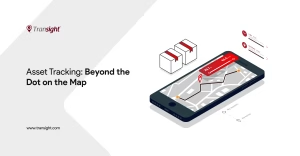
This article explores how asset tracking has evolved beyond simple GPS, the specific industries it is impacting, the tangible benefits it offers, and why it’s becoming an indispensable tool for modern businesses seeking to optimise their operations and gain a competitive edge.
Table of Contents
- The Evolution of Asset Tracking: From Manual to Intelligent
- Core Features of a Modern Asset Tracking Solution
- Transforming Industries with Advanced Tracking
- The Business Benefits: A Return on Investment
- The Future of Asset Tracking: Transight
The Evolution of Asset Tracking: From Manual to Intelligent
The journey of asset tracking is a testament to technological progress. It began in a much simpler form: with clipboards, spreadsheets, and manual records. Businesses would use paper-based logs to track inventory and equipment, a process that was slow, prone to human error, and offered a static, historical view at best.
The first significant technological leap came with barcodes and Radio-Frequency Identification (RFID) tags. These provided a static, non-mobile way to identify and manage items in controlled environments like warehouses. While a major improvement, they still couldn’t track assets once they left the facility.
GPS (Global Positioning System) was the next revolution. It introduced mobility and real-time tracking, enabling fleet managers to monitor the live movement of vehicles on a digital map. This provided a new level of visibility into logistics and transportation, allowing for route optimization and basic fleet management. For a long time, this was the gold standard.
However, businesses are now entering a new, more sophisticated phase: advanced asset tracking. This combines the real-time location capabilities of GPS with a host of other technologies. IoT-enabled sensors are embedded in assets to collect a continuous stream of data on their condition, while telematics systems capture critical operational metrics like engine performance and fuel consumption. This data is then uploaded to cloud-based platforms, where artificial intelligence and machine learning algorithms analyze it to generate predictive insights. The result is a system that goes far beyond location—it provides a complete, intelligent picture of an asset’s entire lifecycle.
Core Features of a Modern Asset Tracking Solution
Modern asset tracking solutions are defined by their ability to provide rich, multi-dimensional data. Key features include:
- Real-Time Location & Status Monitoring: Beyond a simple location dot, these systems provide 24/7 visibility into an asset’s precise location. They also offer crucial context, reporting whether an asset is in use, sitting idle, or being underutilized. This helps businesses allocate resources more efficiently and identify unproductive periods.
- Predictive Maintenance: This is a game-changing feature. IoT sensors can monitor an asset’s health in real-time, detecting subtle early warning signs of equipment issues—such as rising temperatures, abnormal vibrations, or engine fault codes. By analyzing this data, the system can predict when maintenance will be needed, allowing businesses to schedule repairs proactively before a catastrophic and costly breakdown occurs. This minimizes downtime and extends the lifespan of valuable equipment.
- Condition Monitoring: For industries that handle sensitive goods, like food, pharmaceuticals, or chemicals, this feature is critical. Sensors can track environmental conditions such as temperature, humidity, and light exposure. If conditions deviate from a safe range, managers receive instant alerts, ensuring the integrity and safety of the products and maintaining regulatory compliance.
- Geofencing & Theft Prevention: This feature allows businesses to create virtual geographic boundaries around specific locations, such as job sites, warehouses, or delivery zones. If an asset moves outside one of these designated “geofences,” managers are instantly alerted. This not only helps prevent theft and misuse but also ensures that equipment remains on authorized sites.
- Data Analytics & Actionable Insights: A truly advanced solution doesn’t just collect data—it turns that data into valuable, actionable insights. Managers can analyze trends in asset utilization, fuel consumption, idle times, and operational efficiency. These insights help drive smarter business decisions, from optimizing fleet size and purchasing new equipment to identifying opportunities for process improvements.
Transforming Industries with Advanced Tracking
Advanced asset tracking is not limited to one sector; its applications are transforming how businesses operate across a diverse range of industries.
- Logistics & Supply Chain: In an industry where timing and visibility are everything, advanced tracking provides end-to-end monitoring of shipments. Companies can identify bottlenecks in the supply chain, optimize delivery routes in real time to avoid delays, and ensure the integrity of goods—especially perishables—throughout their journey. This level of transparency strengthens customer trust and reduces costly disruptions.
- Construction & Heavy Equipment: Construction sites are hubs of high-value machinery. Asset tracking ensures equipment is where it should be, deters theft, and monitors usage to prevent unnecessary wear and tear. By tracking fuel consumption and idle times, companies can also cut costs and improve sustainability by reducing their carbon footprint.
- Healthcare: In hospitals, misplaced medical equipment can waste valuable time and, in critical situations, even cost lives. Advanced tracking enables hospitals to locate equipment instantly, ensuring it’s available when needed. For pharmaceutical logistics, sensors ensure medicines remain in a safe temperature-controlled environment during transport.
- Manufacturing: Manufacturers rely heavily on consistent uptime. Advanced asset tracking helps monitor the health of production equipment, enabling predictive maintenance that minimizes costly downtime. It also aids in inventory control by providing real-time visibility into the location of raw materials and finished products throughout the facility and supply chain.
- Retail: Retailers use asset tracking to manage inventory across stores, warehouses, and distribution centers. Real-time visibility helps prevent stockouts, reduces shrinkage (theft), and optimizes replenishment cycles. This leads to higher customer satisfaction and reduces waste from over-ordering.
The Business Benefits: A Return on Investment
Implementing advanced asset tracking is a strategic investment that offers a significant return.
- Operational Efficiency: Real-time monitoring eliminates guesswork and provides a clear picture of operations. Assets are utilized more effectively, downtime is drastically reduced, and bottlenecks are identified and resolved quickly, leading to a leaner, more productive workflow.
- Cost Reduction: The savings are substantial. By preventing theft, optimizing routes to save on fuel, and improving maintenance schedules, companies cut significant operational costs. The ability to perform predictive maintenance also eliminates the high cost of emergency repairs and asset replacement.
- Improved Compliance & Safety: Businesses in regulated industries can maintain automated, audit-ready records. Monitoring asset conditions ensures compliance with a wide range of safety and environmental standards.
- Data-Driven Decisions: With continuous, rich insights into asset performance, businesses can make better-informed decisions regarding everything from capital expenditures and maintenance to workforce allocation. This maximizes the return on investment for every asset.
- Enhanced Customer Trust: Today’s customers expect transparency. Whether it’s knowing the exact ETA of a delivery or having confidence in product quality, advanced tracking builds trust and strengthens customer relationships.
The Future of Asset Tracking: Smarter and More Sustainable
The next wave of asset tracking promises to be even more intelligent and connected.
- AI & Machine Learning: These technologies will move beyond simply detecting issues. They will evolve to analyze data patterns and recommend corrective actions automatically, leading to fully autonomous asset management.
- Blockchain Integration: To ensure transparency and trust across complex supply chains, blockchain will be used to create tamper-proof, immutable records of an asset’s journey and condition.
- 5G Connectivity: Faster and more reliable 5G networks will enable a new level of real-time insights, particularly for businesses operating across vast or multiple geographies. This will facilitate instant communication between assets and the cloud.
- Sustainability Focus: Future tracking solutions will help companies measure and reduce their carbon footprint by optimizing routes, minimizing fuel consumption, and identifying opportunities to operate more sustainably, aligning with global green initiatives.
In conclusion, asset tracking has evolved far beyond basic GPS. Modern solutions that integrate IoT, AI, and advanced analytics are providing businesses with an unprecedented level of end-to-end visibility, predictive power, and real-time monitoring. For any business ready to stay competitive and build a more efficient, safe, and transparent operation, advanced asset tracking is not just a technology upgrade—it’s an essential strategic investment in the future.