1. Predictive battery monitoring to prevent problems from causing downtime
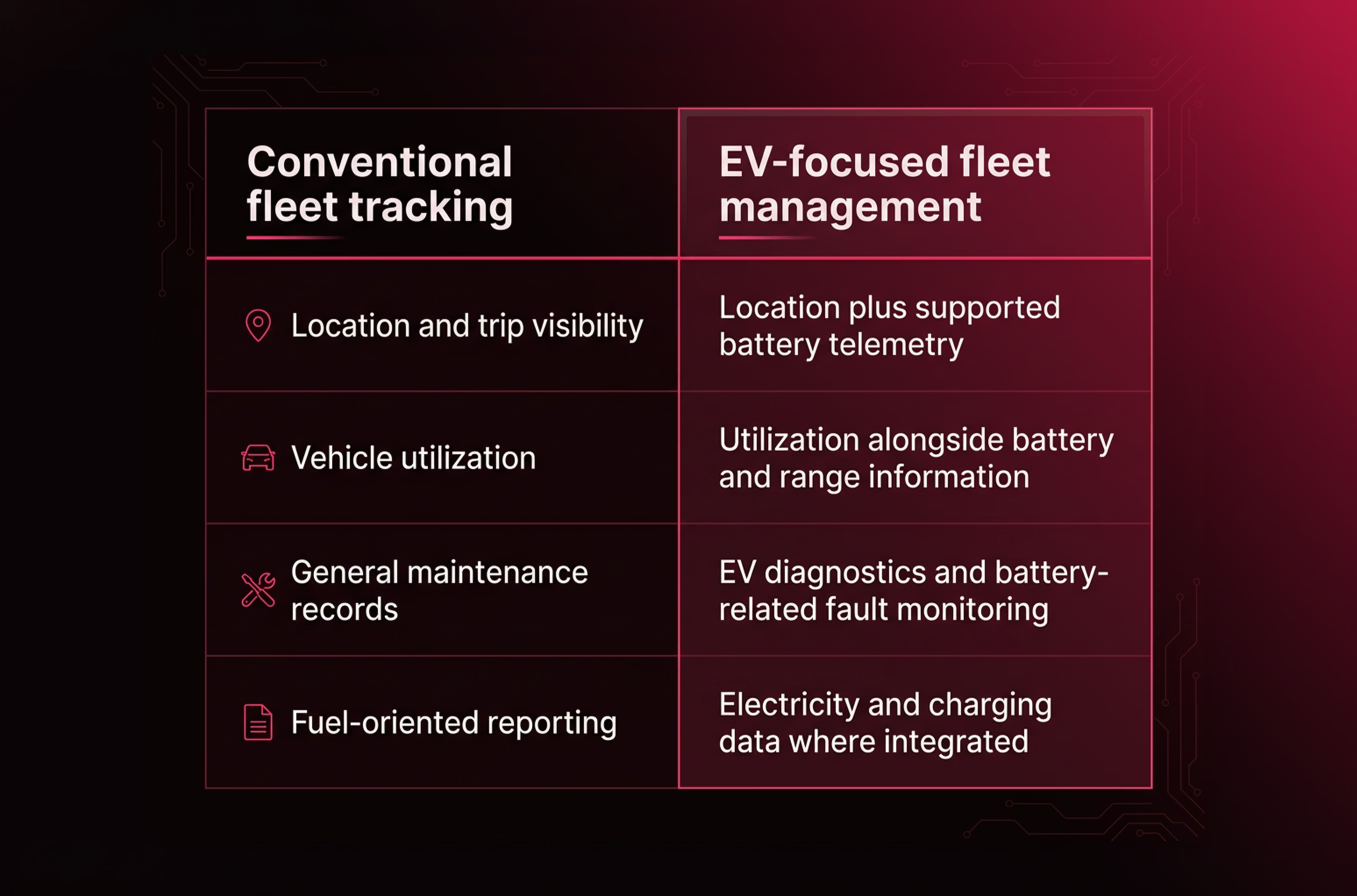
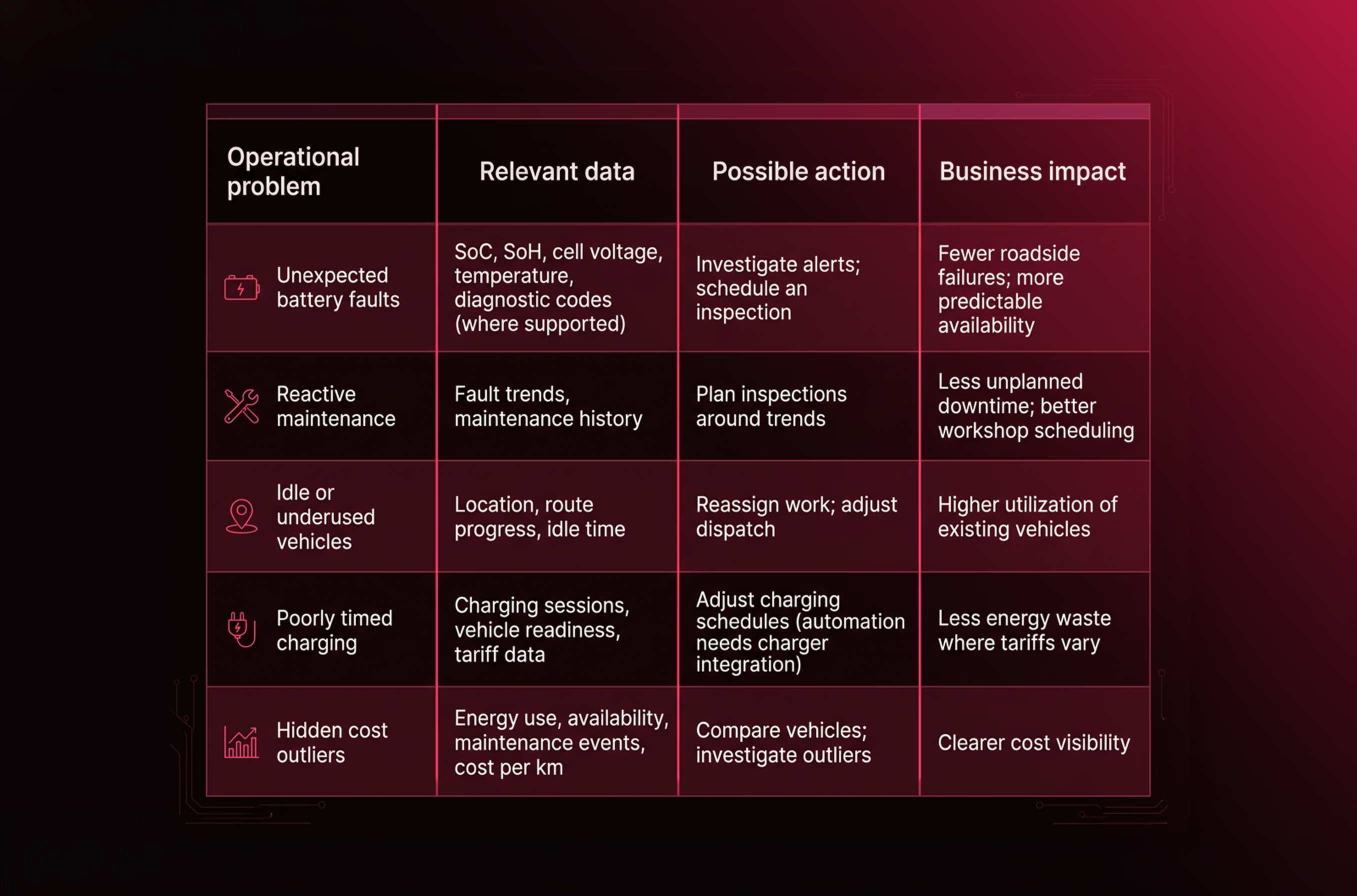
The battery is the most important and least understood component of any EV. In systems where the BMS is made available by manufacturers, SoC/SoH, cell voltage, temperature and diagnostics may be used to detect a problem, for instance, cell imbalance or excessive heat generation of the battery relative to other similar EVs. How soon depends on the information available and the capabilities of the system in detecting problems. Transight’s EV & Battery Management solution provides cell voltage and temperature visibility via CAN/OBD.
2. Minimising unanticipated downtimes with maintenance planning
Trends in diagnostics along with maintenance records enable staff to shift from corrective maintenance to proactive inspection and prompt fault detection. Transight's case study on predictive maintenance through CAN-based battery and motor diagnostics shows that shift in practice. In the other case study related to last-mile EV fleet case study, custom-made telematics devices were claimed to reduce device failure rate and unanticipated trips to workshops by 90%.
3. Increasing vehicle utilisation with live tracking
Live location, route progress and idle periods show where vehicles are earning and where they are not. They can also organise pickups, identify idle vehicles and allocate tasks to other units. According to an Indian industry analyst, uptime is becoming the defining metric for electric commercial vehicles since just one day of downtime is enough to disrupt deliveries.
4. Make charging choices and save energy
Data on charging sessions, vehicle status and electricity prices will help make smarter decisions in terms of charging during periods of low tariffs and charging those vehicles which need it first, if proper integrations are available. Notice the difference: telematics provides information on vehicle status, whereas automatic control of chargers requires integration with charger management software (OCPP, for instance). Open APIs make that integration easier as operations scale. Some operators make use of battery swapping to reduce the time for charging.
5. Track fleet efficiency with the help of analytics
A dashboard integrating data about the vehicle availability, energy consumption, maintenance and operating costs helps compare different vehicles and identify abnormalities, e.g. an abnormally high amount of energy consumption per kilometre by one particular vehicle compared to others. For the wider picture, see the top benefits of fleet management and how telematics improves business efficiency.